Community
From Group Text to Real Community: A Better Way to Run a Private Game
Group texts work until they don't. Here's why private home-game coordination breaks down in chat threads, and what a better flow can look like.
From Group Text to Real Community: A Better Way to Run a Private Game
A lot of private games begin the same way.
A host starts a text thread.
A few regulars say yes.
Someone brings a friend.
The table gets better.
Then eventually the same thread that made everything easy starts making everything messy.
Who is confirmed?
Who is still maybe?
Who has the address?
Did the new person get approved?
Who is actually coming?
Did someone already fill that last spot?
The bigger the game gets, the more the coordination starts to strain.
Group texts are useful, until they start carrying too much
There is nothing wrong with the group text itself. It is usually the natural starting point.
The problem is that group texts were never built to manage private-home coordination well once the stakes of privacy, clarity, and timing become more important.
They blur together early interest, host decisions, roster changes, and private details.
That is manageable when the game is tiny.
It gets harder when:
- the table becomes recurring
- new people are introduced more often
- the host wants better control over who sees details
- the guest list changes close to game time
- players need a clearer path than "just text the thread"
What a stronger flow looks like
A better flow keeps the social feel of a private game while making the host's job calmer.
That usually means separating a few different moments that group texts mash together:
Discovery
People can see that activity exists without private details being exposed too early.
Request
Players ask to join instead of assuming access.
Review
The host gets to approve intentionally.
Reveal
Private details unlock later, on the host's timing.
Follow-through
The roster stays clearer as the night gets closer.
This is one of the clearest ways a coordination product can create real value. It does not need to make the game feel cold or public. It needs to make the flow feel clearer. If you want to see that sequence in product terms, the flow page breaks it down.
Why this matters for community
This is the part people often miss.
Better coordination is not just about saving time. It helps create a better community.
When the host can manage access more deliberately, the table quality improves.
When the roster is clearer, the night feels more stable.
When private details are handled with more care, people trust the system more.
When recurring nights feel organized, players are more likely to return.
That is how a private game stops being a loose text thread and starts becoming a real recurring community.
Where PokerMeet fits in
PokerMeet is built for that exact gap.
It is not trying to turn private-home hosting into an open listing marketplace. It is not trying to replace the role of the host.
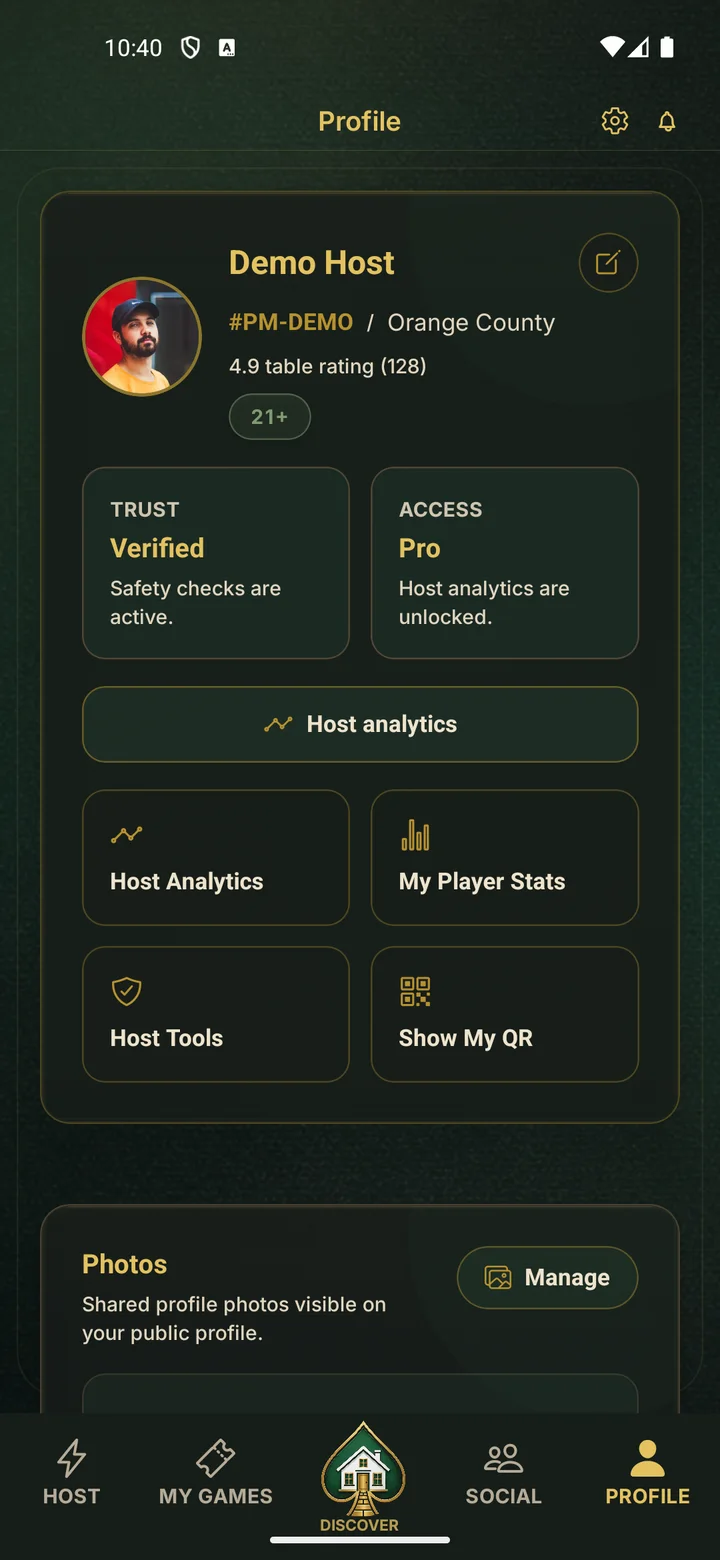
It gives hosts a better way to run the table:
- players request access
- hosts review the roster
- address details stay hidden until approval and address release
- recurring games can stay more intentional over time
That is a better fit for hosts who care about privacy, table quality, and community feel. The safety model stays visible because the coordination model only works if the privacy model is clear.
Why this matters now
PokerMeet is focused on reviewed-region growth, and the early stage is exactly when these coordination problems are most worth solving.
The people who feel this pain most clearly are usually the same people who care most about building good recurring games.
They are the hosts who started in a text thread and grew into something more.
They are the players who want a better experience than chaos.
They are the people trying to protect the private feel of a home game while still letting the community grow.
That is the space PokerMeet is designed for.
A group text can start a game.
A better system can help turn it into a community.
Ready to join PokerMeet?
Want to host with PokerMeet?
Apply to become an approved PokerMeet Host and help build your local poker community.
PokerMeet is a coordination-only platform for home poker games. It does not handle payments, rake, or payouts.
Related notes
Keep reading the rollout and trust notes.
Community • Feb 27, 2026
Meeting New People Through Poker Without Losing the Private Feel
The best private games grow carefully. They make room for new people without losing the trust that made the table good in the first place.
Launch Updates • Apr 3, 2026
PokerMeet Is Looking for Host-Led Growth in Southern California
PokerMeet is opening with a host-led growth focus in Southern California and reviewed regions.
Launch Updates • Mar 27, 2026
Why Strong Hosts Matter More Than Ever for PokerMeet
Strong hosts create stability, consistency, and the kind of community people want to return to.