External beta is live on iPhone via TestFlight. Southern California leads the public beta, and the waitlist is open everywhere.

How it works

From county browse to private arrival, every step is gated.

PokerMeet replaces loose group-text coordination with a trust-first flow for players and hosts: browse, request, review, approve, reveal, and arrive with more clarity.

21+ onlyHost approvalsPrivate addressesNo platform payments
Step 1

Browse live counties without exposing anyone's home

Explore active games and county context before any private location details appear.

Step 2

Open the event and request a seat

See the vibe and structure first, then send a request instead of dropping into an open table.

Step 3

Host reviews the roster with full control

Hosts approve intentionally and protect the game with a tighter standard than group texts.

Player journey

Players browse the county, not the exact doorstep.

The player flow is designed to create confidence before arrival: browse privately, request a seat, get approved, and only then receive the private details needed to show up.

01
Step 01
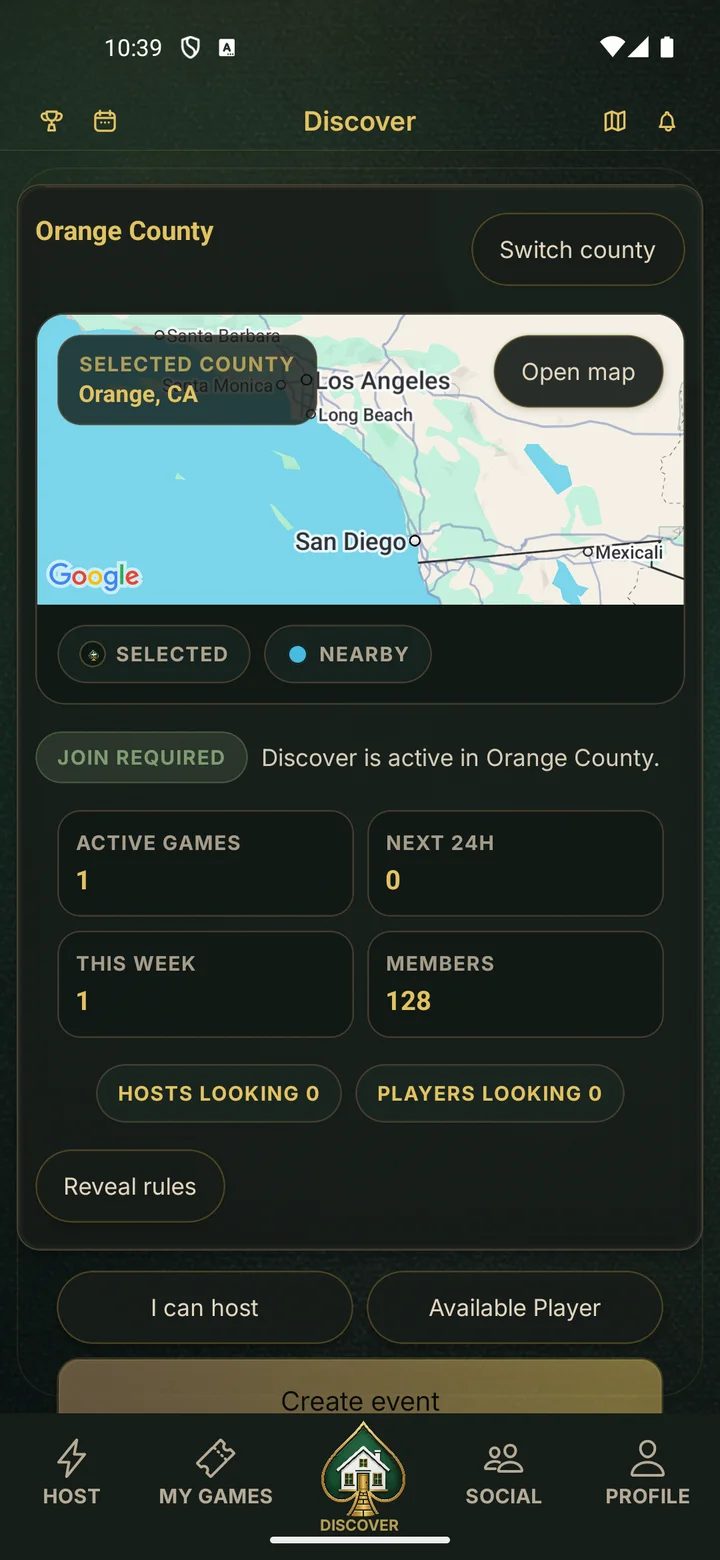
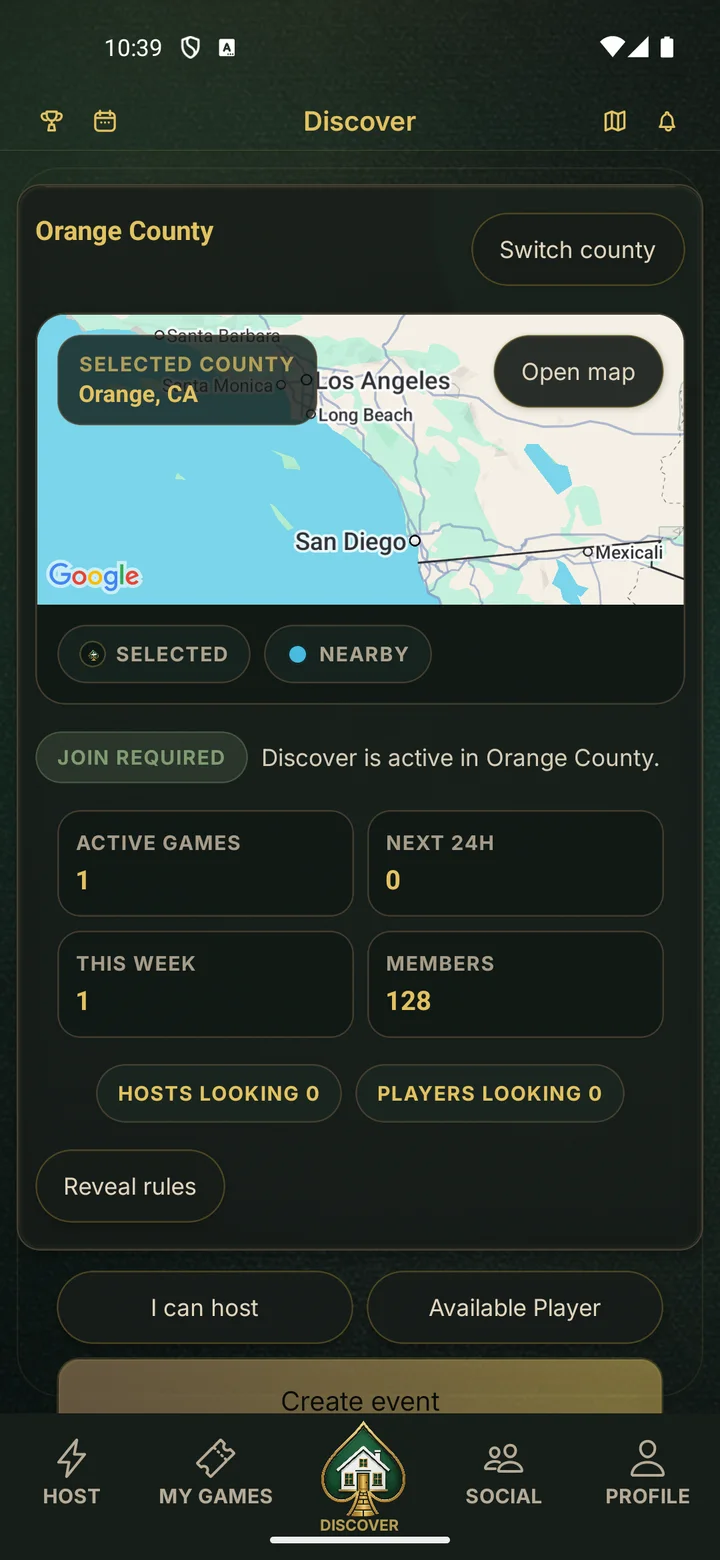
PokerMeet Discover screen with browse filters and hidden address details

Browse live counties without exposing anyone's home

Explore active games and county context before any private location details appear.

02
Step 02
PokerMeet event details screen showing the game overview before a seat request

Open the event and request a seat

See the vibe and structure first, then send a request instead of dropping into an open table.

03
Step 03
PokerMeet host approve or deny requests screen

Host reviews the roster with full control

Hosts approve intentionally and protect the game with a tighter standard than group texts.

04
Step 04
PokerMeet reveal window state with address details still gated

Reveal only after approval and safety checks

Exact location details stay locked until approval and the private reveal window are both in place.

Host journey

Hosts keep the roster intentional from post to check-in.

This is the practical host side of PokerMeet: create the event, review the queue, control approvals, and let private details move only when the standards say they should.

01
Host 01
PokerMeet host create game screen

Publish the night without exposing the doorstep

Set the basics, the standards, and the roster posture before any private address details move.

02
Host 02
PokerMeet host request queue screen

Review every request with context

See who is asking for a seat, then approve intentionally instead of letting the table fill itself.

03
Host 03
PokerMeet host approve or deny screen

Approve, deny, or waitlist with clear control

The guest list stays curated through the entire lifecycle, including reveal timing and check-in.

04
Host 04
PokerMeet host location sharing state showing address gated

Reveal only when policy says it is time

Address visibility follows approval and timing, not browse curiosity or open-post behavior.

Why it feels different

PokerMeet is structured around trust, not open-access traffic.

These are the practical details that make the experience feel more private-club and less like a generic listings feed.

Player privacy

Browse games privately

See nearby games without exposing hosts' addresses.

Seat request flow

Simple seat requests and approvals

Send a quick intro and let the host decide.

Host setup

Create and duplicate events

Set up games quickly and reuse templates for recurring nights.

Roster control

Approve seat requests and manage waitlists

Stay in control of who sits at your table.

Ready to try it

Join the waitlist before your county or table goes live.

The walkthrough shows the flow. The waitlist is how PokerMeet decides where to expand next and how early hosts get onboarded.

California public county discovery during beta
Address reveal only after approval and timing window
County discovery stays separate from private address access